Because $20 million-plus Nantucket sales occur infrequently, a single year provides too narrow a view of the market. From 2024 through early September 2026, LINK recorded nine single-family closings above $20 million across Cliff, Brant Point, Pocomo, Town, and Shimmo. The properties reached that threshold in very different ways, which is precisely what makes the tier useful to examine.
If square footage and acreage alone do not explain trophy pricing, what does?
What the $20M Threshold Actually Represents
Nine closings across nearly three years is still a small sample for a market this size, which is itself informative: this isn't a segment with regular turnover. Cliff accounts for the largest share, four of the nine, though the other five span four different neighborhoods. With a sample this small and this physically varied, the characteristics of the individual property types tell you more than a combined median would.
Size Stops Being a Sufficient Explanation
One of the clearest illustrations comes from Brant Point, where a harborfront property on roughly a third of an acre closed near the middle of the group's price range, around $25 million, despite a footprint well under what the tier typically shows. The sale illustrates how an exceptional harbor relationship and micro-location can carry far more weight than raw square footage when the site itself is exceptionally difficult to replicate.
Several Different Kinds of Property Can Reach $20M+
The current evidence points to at least three distinct routes to this price level, and the strongest properties often combine more than one.
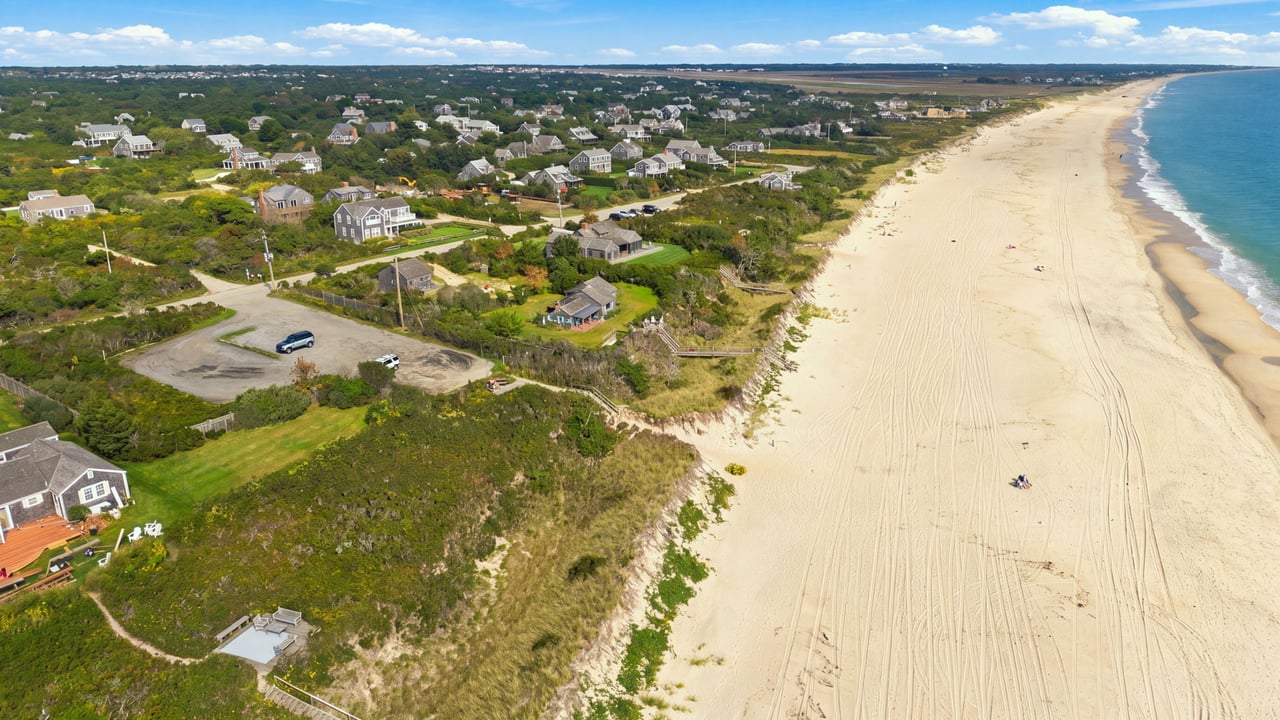
An exceptional water or micro-location property can reach trophy pricing on a small footprint, the way the Brant Point harbor front sale did, where the site itself can carry an unusually large share of the value. Buying waterfront property on Nantucket involves its own distinct considerations that matter more, not less, at this price level.
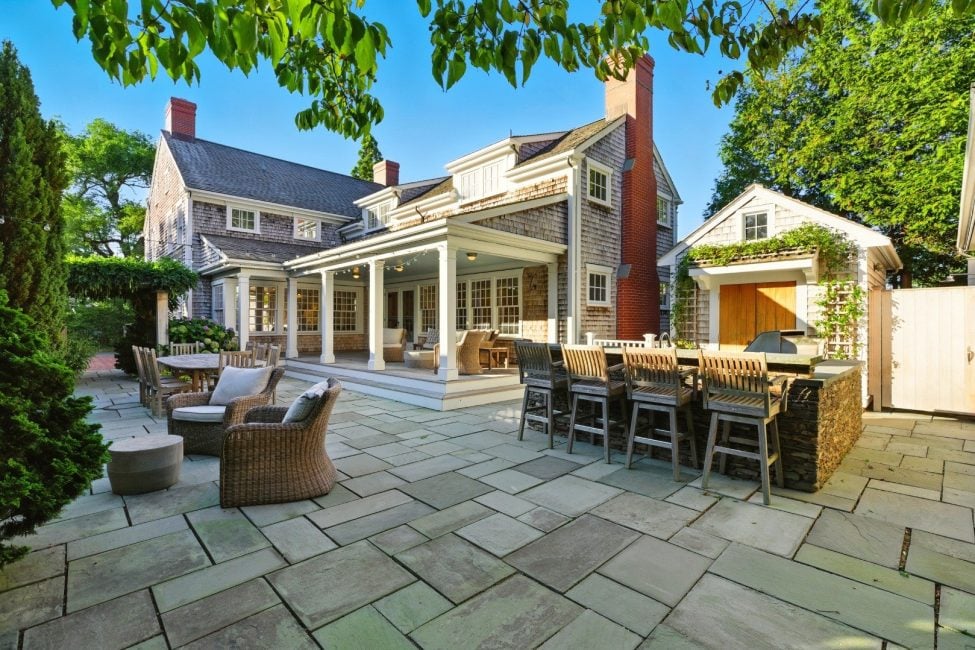
An estate or compound property represents another route to trophy value, combining land, privacy, and multiple meaningful residential spaces. Recent transactions in the tier include a compound explicitly designed around multigenerational family use, with a primary gathering house and genuine separation elsewhere on the property.
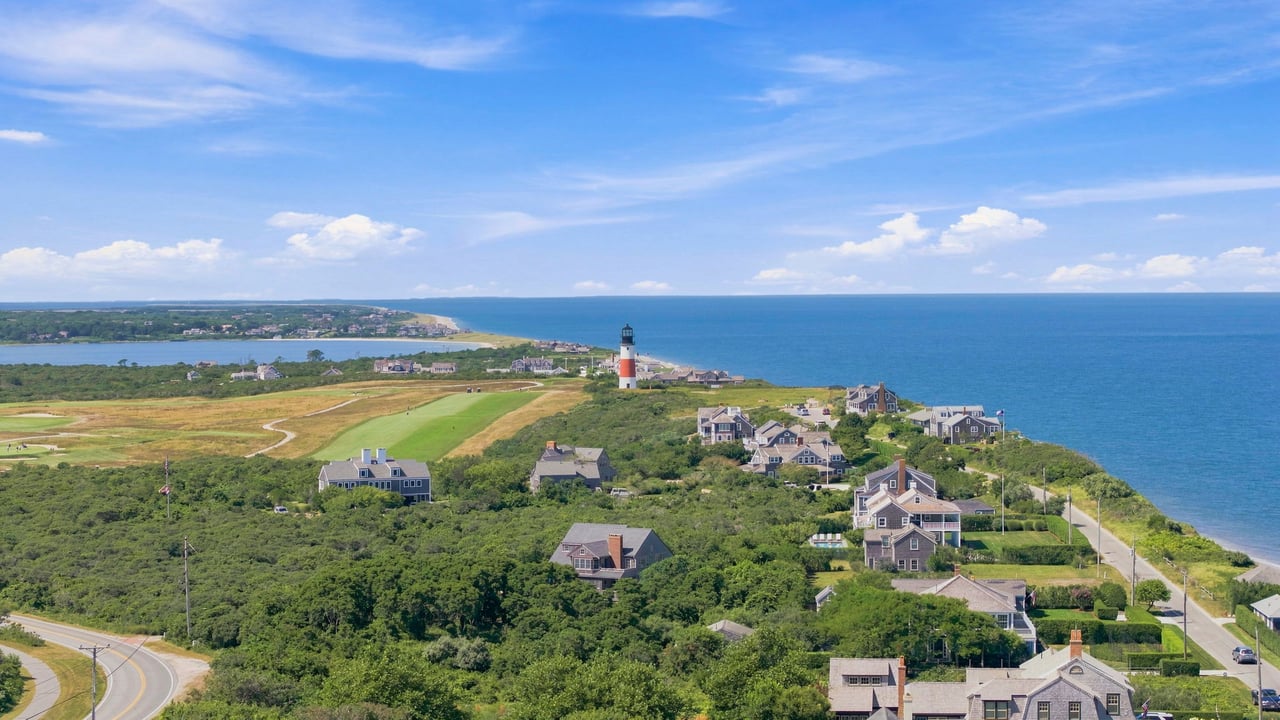
A historically or architecturally significant property can command trophy pricing on the strength of provenance and craftsmanship that no budget can manufacture. Cliff combines historic character and proximity to Town with a supply of premium sites that is inherently constrained.
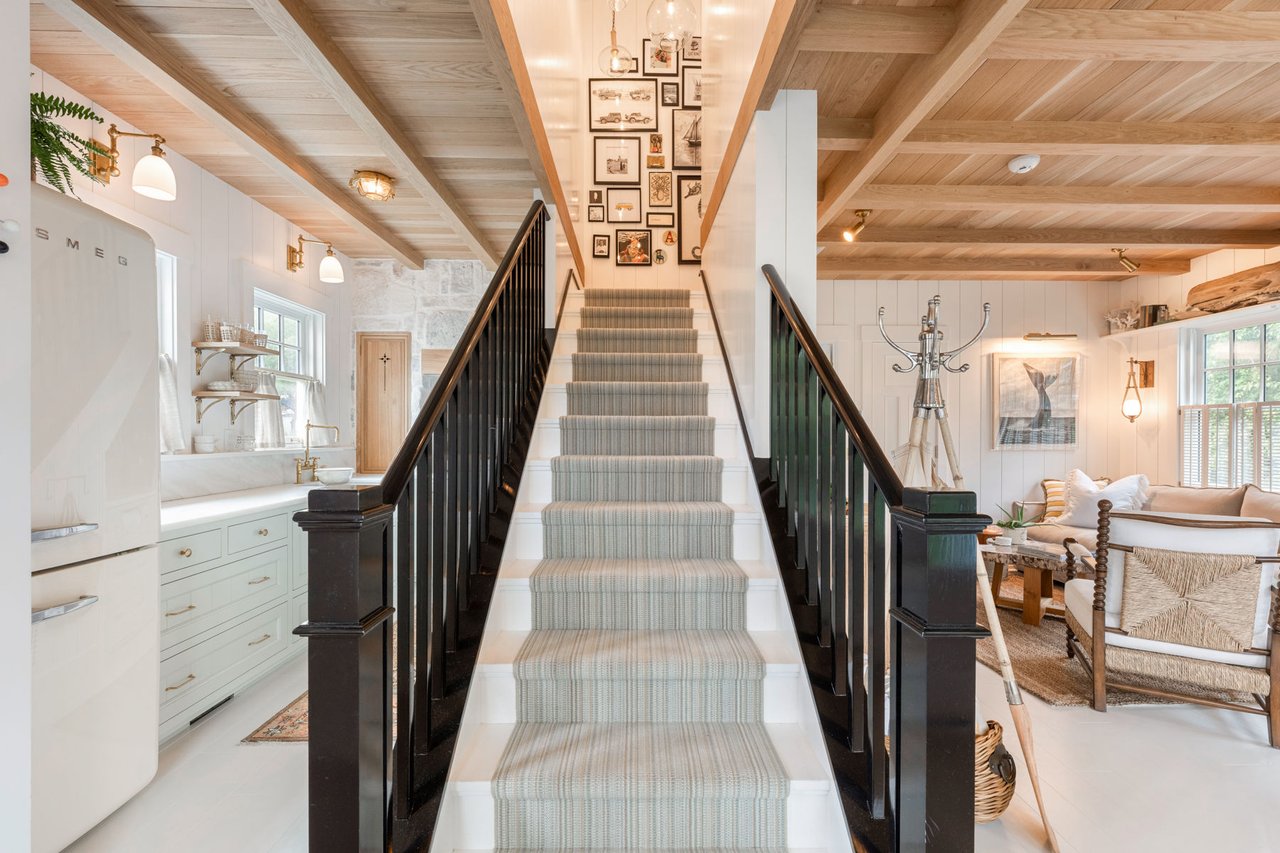
Not every historic route to trophy pricing involves acreage or water at all. In 2024, Bernadette represented the seller of 72 Main Street, a historic Nantucket residence that closed for approximately $24.8 million on just over a quarter acre, the smallest parcel in the current evidence and without a waterfront designation. The sale illustrates a different, equally real form of scarcity: an irreplaceable Main Street location, historic architecture, and a restoration that preserved character that could not simply be reproduced through new construction. A property like this tends to ask something more of an owner than the purchase price: the kind of stewardship, not just ownership, that historic Nantucket homes often require.
A strong water relationship is one of the clearest recurring characteristics of the current evidence. Eight of the nine trophy sales in this window carry a recorded harbor, ocean, or Sound view, and five are direct harborfront or Soundfront. But it isn't the only path to that pricing, and 72 Main illustrates the point: water is one of the most common sources of trophy scarcity on Nantucket, not the only one.
At this tier, the strongest pricing often reflects several scarce attributes working together rather than one feature in isolation.
Why Compounds Matter at This Level
At $10M-$20M, secondary structures already start appearing regularly. Above $20 million, a property can function less like a large house with accessories and more like an estate made up of several meaningful spaces. Recent trophy-tier transactions bear this out directly: a resort-style compound with several standalone cottages and private beach access, and a Cliff property whose second residence has its own full living space, kitchen, and multiple bedrooms, real depth rather than overflow bedrooms.
The distinction matters because a substantial guest house at this level can be a real residence in its own right, not a converted outbuilding: its own bedrooms, its own kitchen, its own entrance, its own outdoor space. That changes what the property can actually do. A guest house built to that standard can let adult children, extended family, or long-term guests be part of the property for weeks at a time without everyone living under one roof, and without turning the main house into a hotel during the stay. Different family members can keep different rhythms, entertaining in one part of the property while another stays quiet, without either group displacing the other.
The estate itself, already sited, permitted, landscaped, and functioning as a whole, is frequently harder to recreate than the individual buildings would suggest on their own.
When Luxury Becomes Operational
The more meaningful distinction is whether the property can support a family, guests, and staff simultaneously without those functions competing for the same space, not simply whether a kitchen is beautiful. The current evidence reflects this directly: substantial kitchens paired with walk-in pantries or a secondary kitchenette, multiple laundry areas, dedicated wine storage, and entertaining space, indoor and outdoor, built to host at real scale. Properties designed for substantial entertaining and multigenerational use can include separate service access, space for catering or a private chef to work independently of the family kitchen, and outdoor areas capable of hosting a gathering without disrupting everyday living. A well-designed estate can support all of those functions without allowing the operational side of the property to intrude on everyday family life.
The Things Money Cannot Easily Recreate
Across the current evidence, the recurring thread isn't a feature. It's difficulty of reproduction. A harbor relationship on a small, well-situated parcel is structurally constrained: there are only so many sites with that relationship to the harbor, and the site itself cannot simply be reproduced elsewhere. A historic property carries architectural and material character that cannot simply be replicated through new construction. An established compound configuration, land, structures, and landscape already arranged and permitted as a working whole, is often harder to reproduce than the replacement cost of the buildings would suggest, especially where current zoning, setbacks, or wetlands review could make an equivalent new arrangement difficult to permit today.
None of that means a similar property could never be built again. It means the specific combination already sitting on a specific piece of land is unusually difficult to match, which helps explain why these properties can command trophy pricing.
Not Everything at This Level Is Publicly Visible
Some of the highest-value Nantucket sales are handled privately. At a level where the inventory is already this scarce, that matters: a public search may not represent the entire opportunity set, and knowing what exists beyond it is part of what private and off-market activity actually means at this end of the market.
What a Buyer Should Actually Evaluate Above $20M
A buyer at this level needs to understand where the value really resides. Is it in the house, or in the site around it? Does the guest accommodation function as a genuine second residence, or mostly on paper? Would the compound actually work for the way the family expects to use Nantucket? Most importantly, which parts of the property could be improved later, and which would be almost impossible to find again?
The Real Question at $20 Million and Above
Above $20 million, Nantucket properties become harder to compare to one another, because the qualities driving value are increasingly specific to the site itself rather than shared across the market. The house matters. So do the guest residences, the way an estate actually functions, the relationship to the water, and the location. But the more consequential question is usually simpler: how difficult would this particular combination be to find again?
Considering a Nantucket property above $20 million? Understanding what can't be replaced matters more here than any spec sheet, and that's worth a direct conversation.
Nantucket's trophy-property market
Questions about $20 million+ Nantucket properties, answered
What makes a Nantucket property worth more than $20 million?
Usually a combination of characteristics that are difficult or impossible to reproduce, such as an exceptional water relationship, a constrained micro-location, historic architecture, or an established compound configuration, rather than any single attribute like square footage or lot size on its own.
Are most $20 million Nantucket homes waterfront?
Five of the nine $20 million-plus single-family closings from 2024 through early September 2026 were coded as direct harborfront or Soundfront, while eight of the nine had some recorded harbor, ocean, or Sound view. A strong water relationship is therefore a recurring characteristic of the tier, but it isn't universal. Bernadette's 2024 sale of 72 Main Street shows that historic architecture and an exceptional Main Street location can provide another route to trophy pricing.
Does a $20 million Nantucket property usually include a guest house?
Guest houses and secondary residences can be an important part of a $20 million-plus compound, and recent trophy-tier sales include examples substantial enough to function as genuine independent homes, full kitchens, multiple bedrooms, and separate living space of their own. They are not, however, a defining feature of every property in the tier.
Why are compounds valuable on Nantucket?
A well-configured compound allows a family, guests, and staff to use a property simultaneously without competing for the same space, and the arrangement itself, land, structures, and landscape already sited and permitted together, is often harder to recreate than the cost of the individual buildings would suggest.
Does square footage determine the price of a trophy Nantucket property?
Not reliably. A Brant Point harborfront property with a relatively modest footprint still commanded pricing near the middle of the $20 million-plus range, while Bernadette's 2024 sale of 72 Main Street, the smallest parcel in the current evidence and without waterfront, closed near $24.8 million. Together they show why architecture, location, water relationship, land, and scarcity can matter as much as raw size at this level.
Are all $20 million Nantucket properties publicly listed?
No. Some trade privately, and the visible online inventory doesn't always represent the complete opportunity set at this level.
Expert Perspective
Value at This Level Is Never Generic
Above $20 million, no two properties compare cleanly. What makes one worth the price rarely applies to the next. Bernadette can help you work through what a specific property's combination of characteristics is actually worth.
Market Data Note: Market statistics and property information are based on LINK Nantucket data and, where applicable, public records including the Nantucket County Registry of Deeds. References to specific transactions are included for market-analysis purposes and do not imply that Bernadette Meyer represented the buyer or seller unless expressly stated.