Two Nantucket homes can both be listed as waterfront, offer similar square footage, and still sit in entirely different value conversations. A harborfront house with calm water and real boating access, a pond-front home in a quiet and private setting, and an exposed oceanfront site with sweeping views are not interchangeable assets, even when a search filter treats them the same way.
The difference comes from the specific relationship between the property and the water, what the site allows an owner to do, what it asks of an owner over time, what has already been built there, and how difficult that whole combination would be to find again. That is why there is no standard waterfront premium on Nantucket, and why a fair price for any one waterfront home can only be judged against the small number of properties that genuinely compete with it.
What Creates the Difference?
- The kind of waterfront. Harbor, pond and exposed ocean frontage offer different experiences and carry different constraints.
- A view is not the same as access. Real beach, boating, dock or mooring use can change how a property functions.
- The land can matter more than the house. Micro-location, elevation, configuration and future options can carry significant value.
- What can be changed later. Regulatory, shoreline and physical constraints affect what an owner can add, protect or rebuild.
- How rare the combination is. The harder a particular mix of site, water relationship and improvements would be to recreate, the less a generic comparison tells you.
Waterfront Is Not One Category
Nantucket's waterfront falls into three broad types: harbor frontage, great-pond frontage, and ocean or bluff frontage. Each carries different flood, construction, erosion and access realities, and the guide to buying waterfront property on Nantucket covers the rules for each. The question here is what those differences do to value.
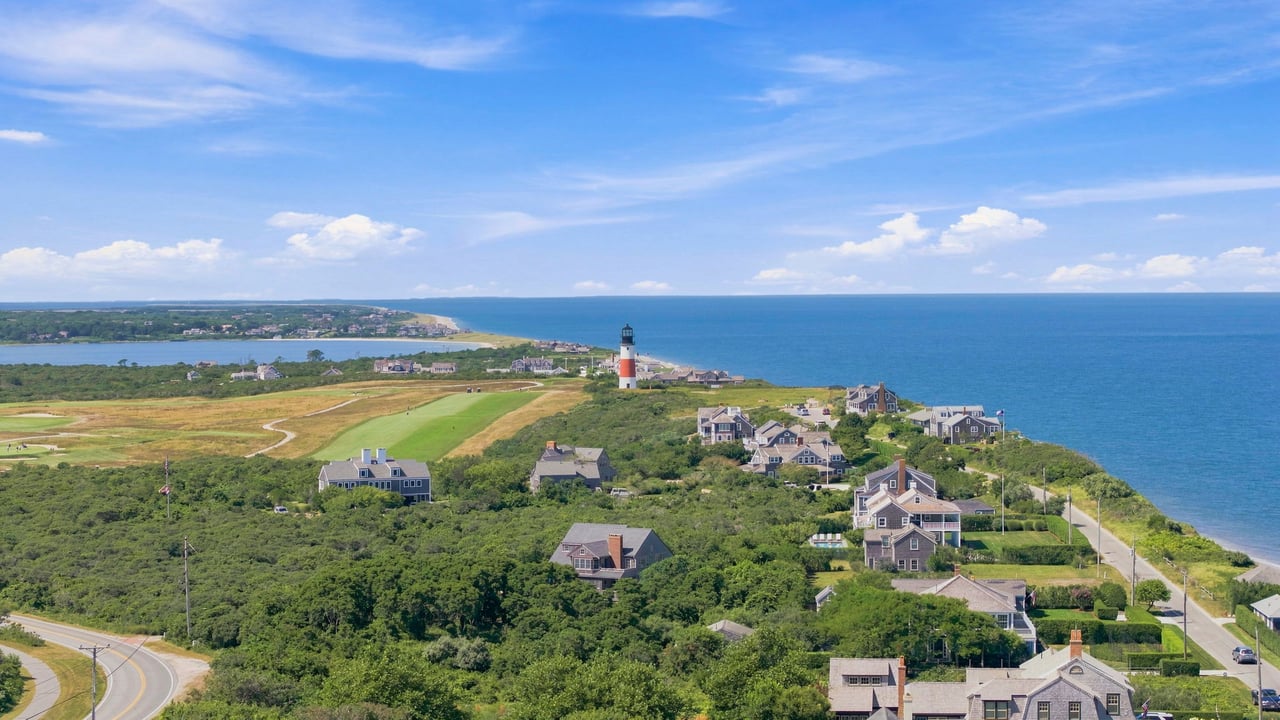
Harbor frontage, concentrated around Nantucket Harbor, tends to offer calmer water, proximity to Town and practical boating use. Great-pond frontage, around ponds such as Long Pond, Miacomet Pond and Sesachacha Pond, is usually quieter and more private and follows its own review process. Ocean and bluff frontage delivers the most dramatic setting and views, alongside the greatest physical exposure.
Someone who wants to keep a boat near Town is shopping for something different from a buyer who wants stillness, or one who wants the open Atlantic. Folding all of them into a single "waterfront" category, and then expecting one figure to describe it, hides most of what matters.
A View, Frontage and Access Are Different Things
Listings blur these three constantly. A water view means the water can be seen. Frontage means the parcel actually meets the shoreline. Usable access means an owner can do something with that relationship: swim from the property, launch a kayak, keep a boat.
None of them guarantees the others. On Nantucket, moorings require Harbormaster approval and registration, while Town Pier slips are allocated separately. The boating access associated with a particular property therefore needs to be confirmed rather than assumed from the address alone. A view-only house can be an outstanding home; it is simply a different asset from a parcel with frontage and genuine boating use. The $5 million analysis found the same thing at that budget, with Town-area sales that carried harbor views but no water access.
Two properties can photograph almost identically toward the water and work completely differently for the people who own them. Which one is worth more depends on how the buyer intends to use the water, so neither is the better buy in every case.
Sometimes the Site Carries More Value Than the House
Square footage is the usual shortcut for comparing homes, and on the waterfront it often breaks down. The analysis of $20 million-plus sales found a clear example in Brant Point. Across the nine single-family closings above $20 million from 2024 through early September 2026, one harborfront property there closed for around $25 million despite a much smaller physical footprint than many properties in that tier. Its harbor relationship and micro-location help explain why square footage alone was a poor way to compare it.
One sale is not a rule, and shouldn't be read as one. It does illustrate something buyers run into at every waterfront price point: on some properties the house is only one component of the purchase, and a significant share of the value sits in the site itself. When that happens, two houses of similar size can be worth very different amounts because the land under them isn't comparable.
Future Options Are Part of Today's Value
What an owner may be able to do with a waterfront property later can materially affect how buyers compare it today. Two houses may look equally usable now while offering very different options five or ten years from now.
On Nantucket, much of that future is shaped by regulation and by the shoreline itself. Conservation Commission jurisdiction, setbacks, septic placement, the direction of shoreline change, and whether a bank can be protected all affect whether an owner can expand, renovate, rebuild or simply hold the property as it stands. The waterfront buying guide explains how those rules work, and the due-diligence checklist covers what to confirm before committing.
The economic point is simpler. A property where the house works well but future expansion is tightly constrained is a different asset from a similar-looking waterfront property with room to change. An existing configuration can also matter when the same arrangement may be difficult to reproduce under current conditions. Whether that applies to a particular house is a question for surveys, records and the buyer's attorney, never something to assume from a listing.
Desirability and Risk Can Exist at the Same Time
It's tempting to treat erosion or flood exposure as a simple deduction. On Nantucket, the most exposed properties are often the ones with the most extraordinary settings: open ocean, uninterrupted views, privacy and a direct relationship to the beach.
Both sides are real. An exposed site can offer something few other properties can, and it can also bring erosion risk, storm exposure, more involved insurance and heavier upkeep. The guide to what changes after you buy shows how differently those obligations play out across ocean, harbor and pond settings. Risk does not erase desirability, and desirability does not erase risk. Buyers weigh that trade-off differently, which is one reason exposed oceanfront sales are hard to compare with sheltered ones.
What Is Already There Can Be Harder to Replace Than It Looks
Improvements matter most in relation to the site they sit on. A substantial guest house, an established pool, mature planting, existing docks or other permitted waterfront improvements or a full compound already arranged on a waterfront parcel can carry value beyond what a simple replacement-cost comparison would suggest when the same arrangement would be difficult to reproduce on that land today. Where setbacks and shoreline rules narrow what can go where, that effect is stronger than it is inland.
The reverse can also be true. An older house that makes less effective use of an excellent site may contribute less to the comparison than the land itself, particularly when set against a newer waterfront property that makes better use of its setting.
Scarcity Depends on the Combination
The useful scarcity question is rarely how many waterfront homes are for sale. It is how many properties offer this particular mix of water relationship, location, access, privacy, land and improvements. For a pond-front house on modest acreage, the answer might be several. For a harborfront site within walking distance of Town, with usable boating access and room to expand, it might be close to none.
The fewer genuine alternatives a property has, the less a broad average of waterfront sales says about it.
Why Comparable Sales Do Not Always Settle the Question
Comparable sales still matter. The work lies in choosing comparisons that actually compete. Two waterfront sales can land far apart because one has harbor rather than ocean frontage, real boating use, more usable land, more flexibility for the future, stronger improvements, less exposure, or simply fewer equivalents anywhere on the island.
At the upper end, the public record isn't always the whole market either. Some significant transactions are handled privately, so listing history alone may not show every relevant sale.
So What Is a Fair Price for an Oceanfront Home on Nantucket?
No island-wide price per square foot or standard waterfront premium answers it reliably. A fair price depends on the quality and usability of the water relationship, the specific site and micro-location, what can and cannot be changed, the condition and layout of the existing improvements, current relevant sales, and how difficult the property's combination of attributes would be to reproduce.
So the right comparison is rarely waterfront against waterfront. It is one specific oceanfront property against the handful of alternatives that actually compete with it. The challenge is identifying the small set of properties that genuinely belong in that comparison.
Six Questions to Ask Before Comparing Two Waterfront Homes
- What kind of water relationship am I actually buying?
- What access comes with the property, beyond the view?
- How much of the value seems to sit in the site, and how much in the house?
- What options would I have to change or expand the property later?
- What exposure or ownership burden comes with this particular setting?
- How difficult would this combination of site, access and improvements be to find again?
And then ask the harder question: if both properties were gone tomorrow, which one would be harder to replace?
Nantucket waterfront value
Questions about Nantucket waterfront values, answered
What factors affect the value of a Nantucket waterfront home?
The type of waterfront (harbor, great pond, or ocean and bluff), whether the property has usable access or only a view, the site and micro-location, what can be changed or expanded later, physical exposure such as erosion and flooding, the existing improvements, and how rare the overall combination is. No single factor sets the value on its own.
Does price per square foot work for comparing Nantucket waterfront homes?
It is a useful reference point but rarely sufficient. On many waterfront properties a significant share of the value sits in the site, the water relationship and the access, none of which square footage measures. Two homes of similar size can carry very different values for exactly that reason.
Is a direct waterfront property always worth more than a home with a water view?
Not always. Direct frontage and usable access often matter a great deal, but location, the house itself, the land, regulatory constraints and how the buyer intends to use the water all affect the comparison. A well-located water-view home can outweigh a less usable waterfront parcel.
Does erosion or flood exposure reduce a Nantucket waterfront home's value?
Exposure is one factor buyers weigh, alongside setting, privacy, scarcity and use. The most exposed properties are often the most dramatic, so exposure and desirability frequently come together. How much exposure matters depends on the specific site, its shoreline and what it allows an owner to protect or rebuild.
Does dock or mooring access affect a Nantucket waterfront home's value?
For a buyer who wants to keep a boat, it can matter a great deal. Moorings require Harbormaster approval and registration, while Town Pier slips are allocated separately, so the boating access associated with a particular property should be confirmed directly.
Expert Perspective
Waterfront Value Is Property-Specific
The useful comparison isn't simply what other waterfront homes cost, but which properties actually compete with the one you are considering. Bernadette can help you understand where the value sits before you make an offer.
Market Data Note: Market statistics and property information are based on LINK Nantucket data and, where applicable, public records including the Nantucket County Registry of Deeds. References to specific transactions are included for market-analysis purposes and do not imply that Bernadette Meyer represented the buyer or seller unless expressly stated.