What Is It Like to Live on Nantucket Year-Round? | Island Guide
Living on Nantucket year-round involves a quiet population of 14,750 residents that expands to over 65,000 in summer. Year-round life includes Nantucket Cottage Hospital, public schools, 122 average days on market, and Steamship Authority ferry links to the mainland 30 miles offshore.
Year-Round Nantucket Dynamic | Local Metric & Living Standard |
|---|---|
Year-Round Resident Population | 14,750 residents (U.S. Census benchmark) |
Peak Summer Population | 65,220+ people on peak days (Nantucket Data Platform) |
Ferry Transit Duration | 1 hour high-speed passenger; 2 hours 15 mins vehicle ferry |
Healthcare Infrastructure | Nantucket Cottage Hospital (24/7 ER, Mass General Brigham) |
Off-Season Window | November through April (quiet, community-focused months) |
Evaluating a year-round move to Nantucket or searching for a full-time home?
Year-round living requires selecting homes built for island winters with close proximity to town, hospital, and schools. Explore active properties or connect with Bernadette.
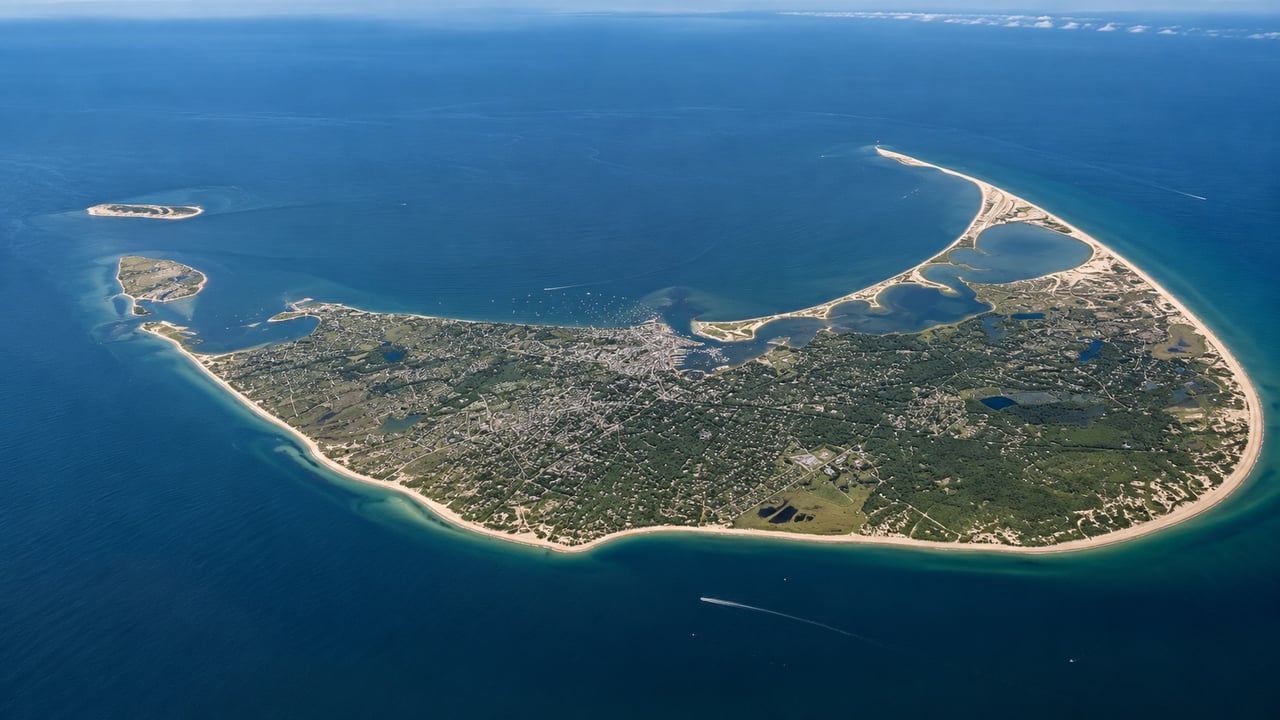
Living on Nantucket year-round means living in two different places. The island that draws more than 65,000 people on a peak summer day settles back to a year-round community of roughly 14,750 residents, and that quieter island, not the summer one, is what full-time life here actually feels like. I have lived here year-round and sold Nantucket real estate for more than twenty years, and I can tell you that most people who ask what it is like are picturing August. The real answer is the eight months almost no one photographs: a small, tight-knit town thirty miles out to sea, where the pace slows, the crowds disappear, and the people who chose this place get it largely to themselves.
What to Know Before You Move
- The year-round population is about 14,750; on a peak summer day the island holds more than 65,000.
- The off-season, roughly November through April, is the real island, and for many residents it is the reason they moved here.
- You can get on and off year-round by ferry and by air, but reduced winter schedules and weather mean you plan ahead.
- Core services run year-round, including a Mass General Brigham hospital and the public schools, though many restaurants and shops close seasonally.
- A year-round home is a different purchase than a summer house, and that difference is where buyers most often need local guidance.
The year-round population is smaller than the summer crowds suggest
The single most important thing to understand about full-time life here is the seasonal swing. The U.S. Census puts Nantucket's resident population at roughly 14,750. In summer that number multiplies several times over: the Nantucket Data Platform effective population study, the most rigorous count the island has, measured a peak of 65,220 people on the busiest day, and the Town of Nantucket notes the population can climb above 80,000 across July and August.
Population figures sourced from U.S. Census Bureau QuickFacts and Nantucket Data Platform Effective Population Study.
What that means in practice is that you are joining the smaller of two towns. After Columbus Day the traffic thins, the wait lists vanish, and the island contracts to the people who live here. If you are evaluating Nantucket as a full-time home, judge it on October through May, not on a perfect week in July.
Getting on and off the island shapes daily life
There is no bridge to Nantucket. You arrive and leave by ferry or by plane, and that single fact organizes a surprising amount of year-round life. The Steamship Authority runs year-round and operates the island's only vehicle ferry, with a traditional boat of a little over two hours and high-speed service of about an hour; passenger options expand in season. Year-round air service connects the island to the mainland through Nantucket Memorial Airport, with additional carriers added seasonally.
- Steamship Authority Terminal: 1 Steamboat Wharf, Nantucket, MA 02554 (Vehicle & Passenger)
- Nantucket Memorial Airport (ACK): 14 Airport Road, Nantucket, MA 02554
- Year-round air carriers: Cape Air (Boston, Hyannis), additional seasonal service via major airlines
Ferry terminal and airport logistics sourced from Steamship Authority and Nantucket Memorial Airport schedules.
The off-season reality is that schedules tighten and weather gets a vote. Residents learn to build in buffer days, book the boat ahead, and plan mainland appointments, deliveries, and medical visits around the timetable rather than against it. It is manageable, and after a winter or two it becomes second nature, but it is a genuine difference from mainland life that every prospective resident should weigh honestly.
Year-round services are real, but they keep island hours
Nantucket is a self-contained town, not a summer outpost that goes dark in the winter. The island has its own hospital, Nantucket Cottage Hospital, a Mass General Brigham affiliate whose emergency department is open around the clock and whose current facility opened in 2019. Families are served by the Nantucket Public Schools, including the island's public high school, where class sizes stay small. Groceries, the pharmacy, the post office, and the everyday essentials all run through the winter.
- Nantucket Cottage Hospital: 57 Prospect Street, Nantucket, MA 02554 (24/7 Emergency Room)
- Nantucket Public Schools: 10 Surfside Road, Nantucket, MA 02554
- Year-round grocery hubs: Stop & Shop (Pleasant St & Mid-Island locations)
Hospital and school location details sourced from Nantucket Cottage Hospital and Nantucket Public Schools official records.
What shifts is redundancy and rhythm. Many restaurants and shops close from late fall into spring, certain services run on reduced off-season hours, and there is simply less backup than you would find in a mainland suburb. None of this is a dealbreaker for the people who live here happily year-round. It is, however, exactly the kind of practical texture worth understanding before you commit, and it is part of what the wider Living on Nantucket picture covers in more depth.
Winter is the island most residents move here for
After more than twenty years of island winters, I can tell you that almost no one who lives here year-round leads with summer when you ask what they love. They lead with January. The off-season is when the island becomes a small town in the best sense: you know the person behind the counter, the beaches belong to the dog walkers, and the year-round cultural life, from the Dreamland's calendar to the steady turn of community events, carries the months between seasons. The same holiday spirit captured in our Nantucket Noel guide is really just the front door to a quieter island that runs well past the new year.
This is the part that does not show up in a listing photo, and it is the part that decides whether year-round life here is right for you. The summer is spectacular and easy to fall for. The winter is the test. I have watched it win people over for two decades, and for the people it wins, it is the whole point.
What year-round living means when you're choosing a home
Here is where the lifestyle question becomes a real estate question, and where it helps to work with someone who has lived the answer. A year-round home on Nantucket is not the same purchase as a summer house, and the things a seasonal buyer can overlook are the things a full-time resident has to weigh first.
In practice that means looking hard at how a house handles a damp, windy island winter: the heating system, the insulation, and how exposed the site is to weather. It means asking whether a neighborhood stays genuinely populated and serviced in the off-season or empties out after Labor Day, and how close the home sits to town, the schools, and the hospital for everyday year-round access. Those considerations rarely move a summer buyer and almost always matter to a year-round one.
It is also worth being candid about the practical reality of buying here at all. Nantucket's housing supply is fixed by geography, not demand, so inventory suited to genuine year-round living is limited and the homes that fit the bill do not sit on the market for long. Our guide to buying a luxury home on Nantucket goes deeper into why the island's inventory stays so tight, but the short version for a year-round buyer is this: hesitation costs you the property, so it helps to work with someone who hears about the right one early and can move on it decisively.
This is also where local judgment earns its keep. After more than twenty years of both living through Nantucket winters and representing buyers, I can tell you which pockets of the island hold a year-round community and which go quiet after Labor Day, and which homes were truly built for full-time living rather than dressed up for July. No directory can do that. It is worth adding that the off-season is often the smartest time to buy, for reasons laid out in our look at the top reasons to buy in the off-season. When you are ready to move from reading about the island to evaluating actual homes, the step-by-step guide to buying on Nantucket is the place to start.
Bernadette Meyer is a Real Estate Broker with Maury People Sotheby's International Realty on Nantucket, with over twenty years of year-round island advisory experience. Recognized on RealTrends Verified and Tom Ferry's "The Thousand," she ranks #168 nationally by volume and #2 overall on Nantucket, representing full-time residential buyers and sellers across Town, Mid-Island, and Siasconset.
Living on Nantucket year-round
## Questions about year-round life on Nantucket, answered
How is living on Nantucket year-round different from summering there?
Year-round life on Nantucket is small-town life on an island thirty miles out to sea. The summer crowds give way to a community of roughly 14,750 residents, the pace slows considerably from November through April, and daily life is shaped by the ferry and flight schedules that connect the island to the mainland. Most full-time residents say the quiet off-season, not the busy summer, is what they value most.
What is the year-round population of Nantucket?
The year-round resident population is approximately 14,750, according to the U.S. Census. On a peak summer day the island can hold more than 65,000 people, so full-time residents experience a dramatically quieter island for most of the year.
Can you live on Nantucket in the winter?
Yes. Nantucket is a year-round town with its own hospital, public schools, grocery, and essential services that operate through the winter. Many restaurants and shops close seasonally and ferry and flight schedules tighten, so winter living rewards planning, but a substantial year-round community lives here happily through the off-season.
How do you get on and off Nantucket in the off-season?
By ferry and by plane. The Steamship Authority runs year-round, including the only vehicle ferry, and year-round air service connects the island to the mainland through Nantucket Memorial Airport. Off-season schedules are reduced and weather can cause cancellations, so residents typically book ahead and build in buffer time for mainland trips.
Is there a hospital on Nantucket?
Yes. Nantucket Cottage Hospital is the island's only hospital, a Mass General Brigham affiliate with a 24-hour emergency department, and its current facility opened in 2019. More than thirty specialists also visit the island on a rotating basis to provide care closer to home.
Is Nantucket a good place to live full-time?
For the right person, yes. Nantucket offers a close-knit year-round community, strong public schools, an island hospital, and a quality of life that many residents prize most in the off-season. The trade-offs are the logistics of island living and the seasonal closures, which is why it helps to evaluate the island on its winter rhythm, and to choose a home built for year-round life, before making the move.
Expert Perspective
Considering a Year-Round Move to Nantucket?
Buying for full-time island life takes more than finding the right house; it takes local judgment about which neighborhoods live year-round and which homes were truly built for it. Bernadette has spent more than twenty years living on Nantucket and guiding the buyers who make the move.