Few scenes are as transportive as a tree-lined country lane. Some of Nantucket's most iconic photographers, like Beverly Hall and H. Marshall Gardiner, made studies of the island's serpentine dirt roads. These quiet streets capture the imagination and force us to slow down and take in the beauty around us.
Angola Street and the North of the Mill neighborhood allow a glimpse of Nantucket's bucolic past right in the heart of the Old Historic District. Just moments away from the stately mansions along Main Street and Pleasant Street, once home to whale oil merchants, what sets the North of the Mill neighborhood apart are the little oases of public green space, increasingly rare within the dense downtown. On Angola Street, there is room to breathe, to explore hidden paths and narrow lanes, all while still being close to some of the island's most important historic architecture.
This part of town south of Main Street was historically called Newtown. Newtown was a racially and ethnically diverse neighborhood, and, as the name suggests, it was a place where many people new to the island established homesteads. Nantucket has always attracted people from all over the world who were seeking to make a home for themselves in the land of opportunity. Life on the remote island was not without its challenges, but the opportunities to open businesses, start families, and build a life were rewarding.
Within Newtown were two neighborhoods that were historically home to the island's Black residents, New Guinea (near the "Five Corners" intersection), and Angola Street.
New York Times bestselling author and Nantucket resident Nathaniel Philbrick wrote, in Away Off Shore, of this part of town: "Indeed, when viewed from the perspective of today's multicultural society, New Guinea, not the "Quaker utopia" to the north, was the island's truly exemplary community."
Why is Nantucket's Angola Street Named Angola Street?
The history of Angola Street begins with the name itself. Angola is a country in southern Africa, and the second-largest Portuguese-speaking nation in the world. Angola is also more than 6,000 miles away from Nantucket, so how did this street get its name?
Long ago, many streets on Nantucket had no formal names. The second president of the United States, John Adams, required all towns in the United States to provide the federal government with a list of the streets in town. The island's assessor, Isaac Coffin, wrote up a list of one hundred street names on the island, describing their locations and what houses were there. This list, written in 1799, is our best record of the early streets and lanes of Nantucket. Angola Street shows up on this list. Isaac Coffin likely called it Angola Street as there were many Black Nantucketers who lived here.
Angola Street was home to Arthur Cooper, a man whose name has entered the history books. After escaping slavery in Virginia, Arthur Cooper traveled to New Bedford and arrived on Nantucket in 1820. Arthur, his wife, Mary, and their children lived on Angola Street. In 1822, a slave catcher named Camillus Griffith was dispatched to Nantucket by Arthur's former owner. Griffith was on the island with the sole purpose of taking Arthur and his family into custody and returning the Coopers to slavery in Virginia.
Word of Griffith and his deputy's plans for a dawn raid on the Cooper family house on Angola Street spread throughout the island. Neighbors - Black and white together - created a diversion in front of the house so that the Cooper family could be taken to safety at the nearby home of Quaker abolitionists. The Cooper family remained in hiding until a judge ruled that Arthur could not be forcibly removed. Griffith returned to Virginia, and Arthur Cooper lived as a free man on Angola Street until his death in 1853.
Many buildings on Angola Street fell into disrepair over the years, or were outbuildings that had been part of the whale oil refinery process and no longer needed after the collapse of the whaling industry. As a result, every house on this street is "new," that is, built after 1974. Despite these many changes, efforts to retain the sense of place in the North of the Mill neighborhood are the result of conservation-minded residents and the Nantucket Land Bank.
Why is there a "Pony Field" on Mill Street?
One of the largest pieces of open space downtown can be found right in this neighborhood, the Eleanor Ham Pony Field, located at 10 Mill Street. This 3/10 of an acre field was where Eleanor Ham kept a pony she raced at the Miacomet Raceway on Somerset Road throughout the mid-20th century. Ralph Marble, who owned the raceway grounds, offered weekly horse races in season from 1965 until the 1980s. Each week, more than 300 people would gather to watch harness and saddle racing. Eleanor left the Pony Field to the Nantucket Historical Association upon her death in 1978 for the purpose of "enhancing and preserving the beauty of Mill Street."
There are other oases of open space in the North of the Mill neighborhood. Across the street from the Pony Field, at 14 and 16 Candlehouse Lane, lies the Land Bank's Garden of the Sea property. This quarter acre park has three large garden beds full of flowers and plants specially chosen to attract pollinators. In the 1980s, the owners of this property had a nursery business that specialized in heathers, daylilies, and ornamental grasses. Neighbors grew used to the beauty of the garden and the peace it provided. The North of the Mill neighborhood helped raise money so that the Nantucket Land Bank could preserve this neighborhood gem. This is a beautiful spot to sit and watch the birds, escape the hustle and bustle of town, and enjoy a picnic lunch.
Adjacent to the Pony Field is a mowed path through tall grasses that sway in the breeze. This path leads to ribbons of short trails that trace through a half-acre of open space between North Mill Street and Prospect Street. These trails lead to a canopy of tall trees and are a perfect place for a dog walk or a short stroll to stretch your legs. This network of trails atop the hill is another great example of the North of the Mill neighborhood and the Land Bank working together to preserve community character and protect treasured green spaces from development.
Was Nantucket Part of the Underground Railroad?
After learning the story of Arthur Cooper, many people wonder if Nantucket was part of the Underground Railroad. Nantucket historian Dr. Frances Karttunen writes in Nantucket Places & People 2: South of Main Street that it wouldn't be surprising if there was a Quaker conduit in place to move fugitives from slavery to safety in Nantucket. Such an operation would necessarily have been a deep secret, however. Only a single document is known to exist that asserts unequivocally that Nantucket was a stop on the Underground Railroad.
Whether or not Nantucket was a stop on the Underground Railroad, Dr. Karttunen writes that in the 1800s, before the Emancipation Proclamation, Nantucket was a safe harbor for people who were fugitives from slavery in other states.
What Is There To Do Near Angola Street?
Now that you have learned a little more about Angola Street, you might be in the mood to learn more about Nantucket's rich history. Angola Street is perfectly situated for your own walking tour of some of Nantucket's iconic whale oil merchant homes, like the Joseph Starbuck house at 4 New Dollar Lane, the Three Bricks, homes Joseph built for his three sons (93, 95, and 97 Main Street), and the Hadwen House (96 Main Street), where Joseph's daughter, Eunice Starbuck Hadwen, lived with her husband, William Hadwen. William built the house for Eunice, as her father did not build houses for her or her sister Eliza! (They had to find husbands who could do so, and they each did!)
If hands-on, experiential history is more your speed, the Nantucket Historical Association's 1800 House (4 Mill Street) is just steps from Angola Street. There, you can take a decorative arts class with world-renowned teachers. Whether you want to make a Sailors Valentine or Nantucket Lightship Basket, or try your hand at silversmithing, scrimshaw, or penwork, the NHA's Heritage Crafts program is a unique experience just moments from your door.
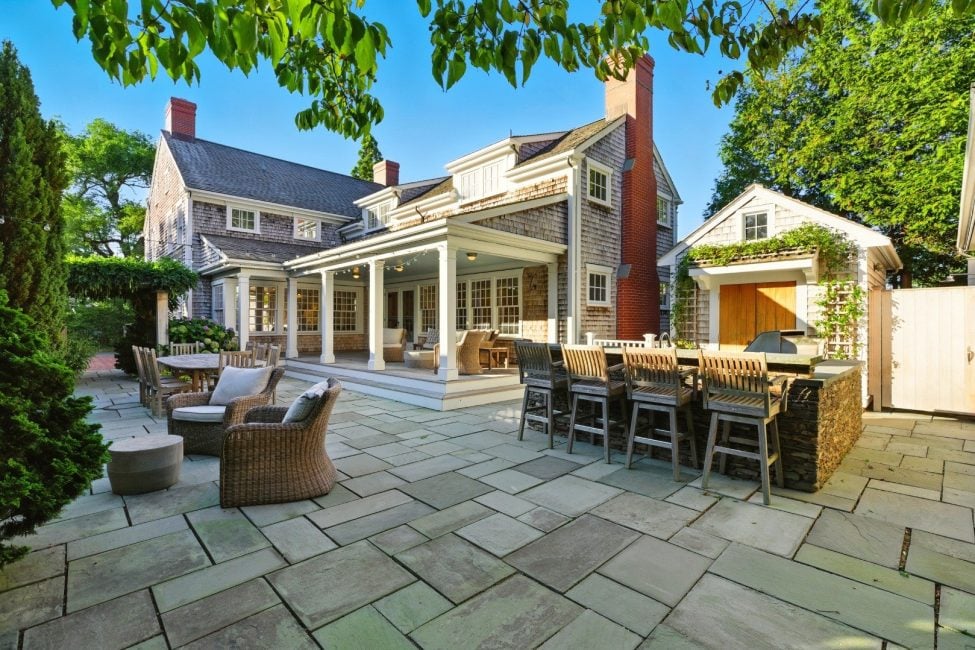
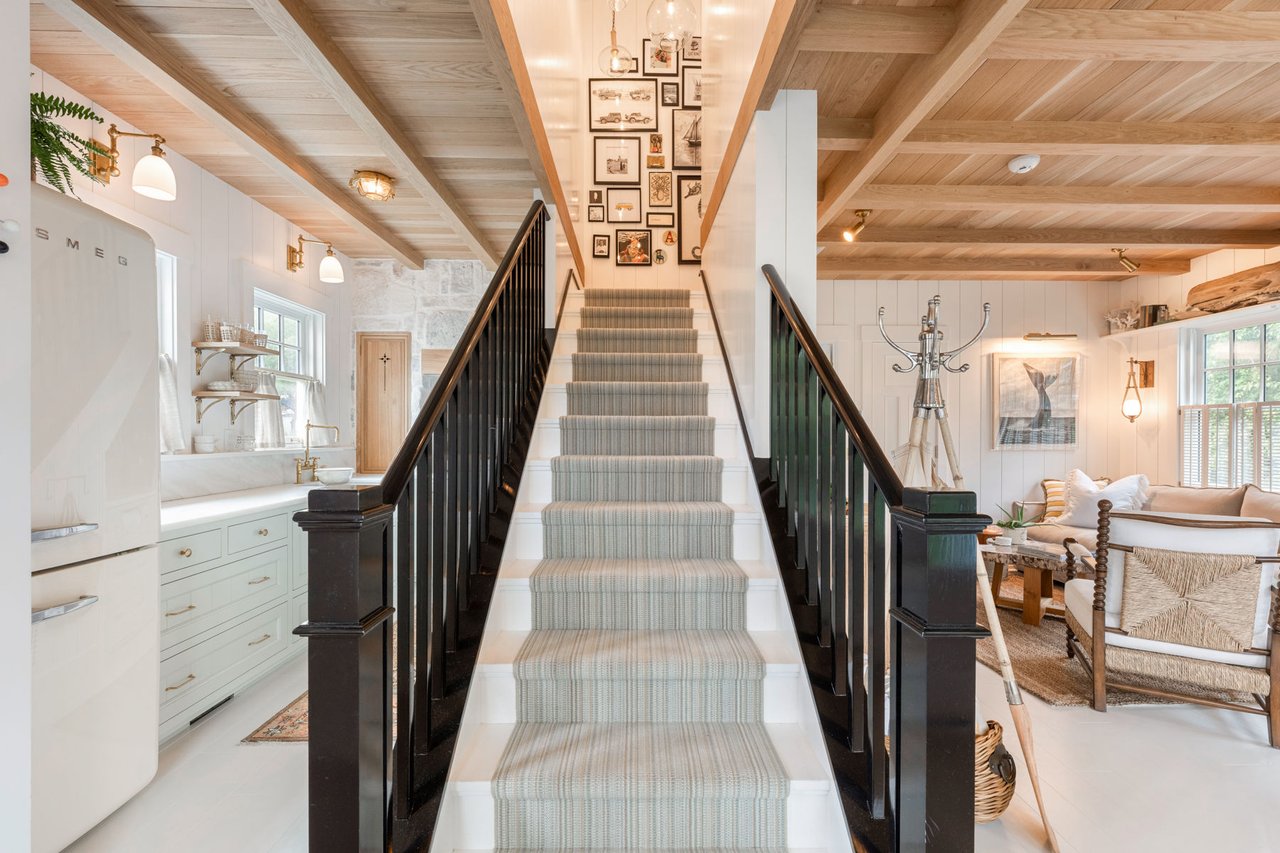
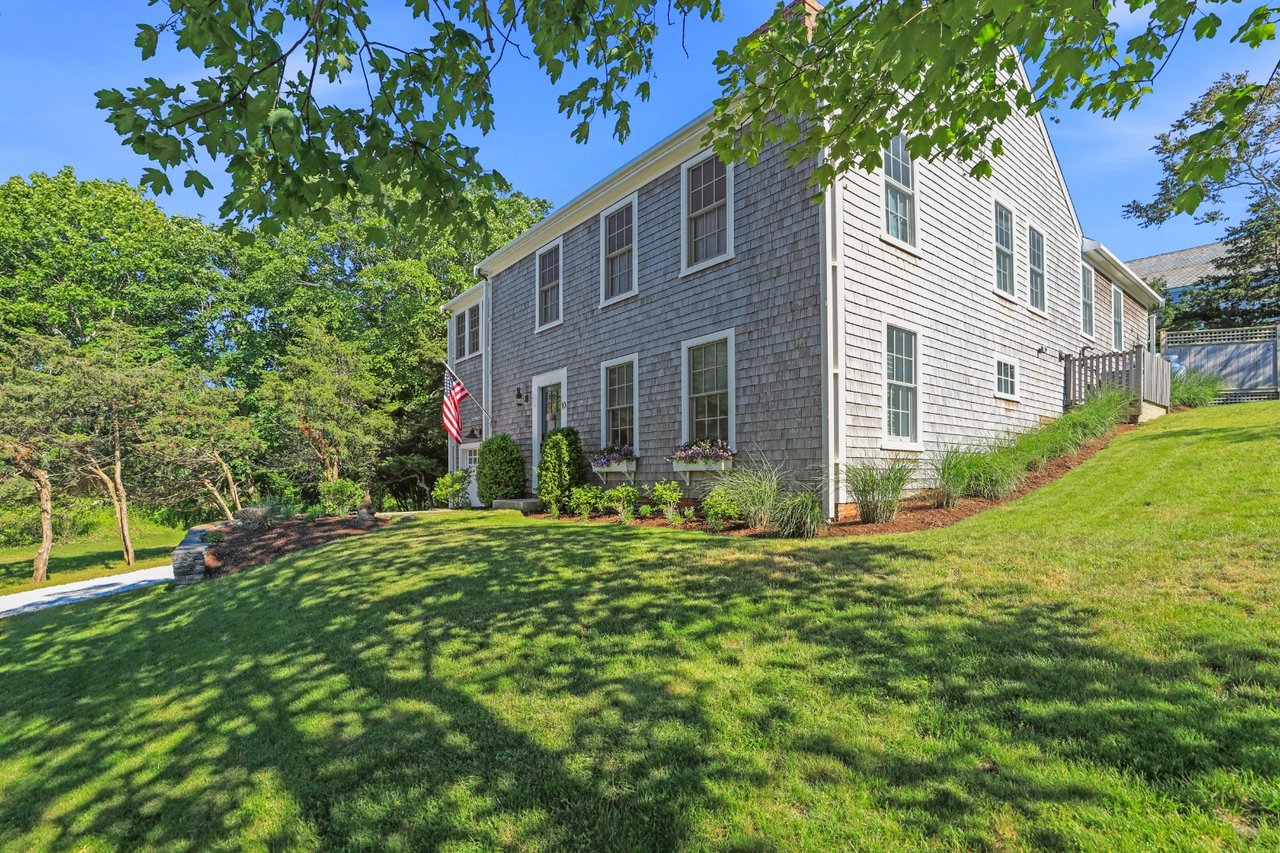
For today's buyers, a home on Angola Street offers a rare pairing in the heart of the Old Historic District: proximity to Nantucket's grandest architecture, just around the corner, alongside the quiet green spaces the Land Bank has spent decades protecting. Every house on the street itself has been built since 1974, so the draw isn't an antique structure; it's the setting. One recent example is 10B Angola Street, recently sold by Bernadette Meyer. See more of Nantucket's Historic Town neighborhood.